
Nobody knows exactly why, but this is a common and normal activity for dogs, especially puppies. Most dogs do not suffer any repercussions from this, but coprophagia could lead to re-infection from pre-existing internal parasites or to gastrointestinal upset from bacterial or viral load. Products that reportedly change the flavor (and tastiness) of the feces exist, but do not work for every dog. If your dog likes to sample the feces, the best thing to do is remove it before they can eat it!
Coughing/sneezing noises: Reverse sneezing
Coughing and sneezing noises can indicate serious respiratory, cardiac, or metabolic disease or they could be something much less harmful such as reverse sneezes. A reverse sneeze itself is not harmful and is seen more often in short-nosed dogs and beagles. Many owners become concerned when they hear a reverse sneeze and may think they have an emergency on their hands, but a reverse sneezing episode will only last a few minutes, at most.
While the best thing to do is let your veterinarian see your pet in order to do a full evaluation and rule out diseases or conditions that can harm your pet, comparing your pets activities to these videos may help you discern between a reverse sneeze and something more serious:
Reverse sneezing video
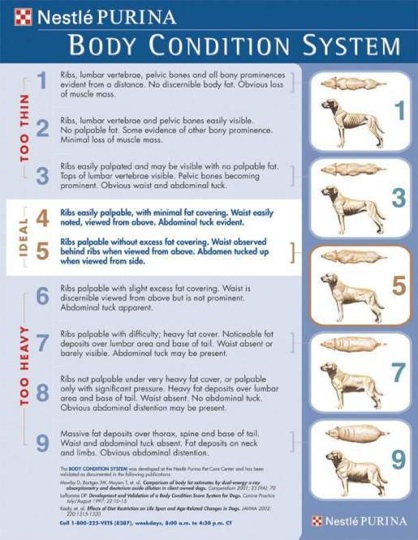
Body Condition Score
Many of you have asked the question: “Is my pet fat?” Veterinarians answer that question using a combination of observations, but a major assessment tool used is Body Condition Score. While monitoring a pets weight is an important step in keeping them healthy, Body Condition Score is a more inclusive assessment that grades an animal on a spectrum from unhealthily thin, to ‘just right’, to unhealthily fat.
Mammary Cancer
There is a relationship between spaying and prevention of mammary cancer in both the canine and feline population.
In an un-spayed (intact) female dog, 50% of tumors developed are mammary gland tumors. If a female dog is spayed before her first heat, she only has a 0.5% chance of developing mammary cancer. After the first heat, this risk increases to 8%. Once a female reaches her third heat, she has a one-in-four chance (26%) of developing mammary cancer. Spaying after the second heat does not appear to decrease the risk of mammary cancer, but may alleviate malignancy if mammary cancer does develop1.
Similar relationships are seen in cats, with those spayed before 6 months of age having a 9% risk and those spayed between 6-12 months having a 14% risk 2.
Here are some excellent links that summarize the relationship between mammary cancer and spay:
Clipping your dog’s nails
While your local vet or groomer can usually take care of your dog’s nails, most owners can do it themselves. This video will show you how. Just be sure to take your time.
